Best Sectional Sofas for Open Concept Living
Disclosure: This post may contain affiliate links, which means we may earn a small commission if you make a purchase through our links — at no extra cost to you. We only recommend products we genuinely love and believe will add value to your home. Thank you for supporting TheHomeGlowUps.
Open concept living rooms are beautiful, but they come with a real design challenge. Without walls to anchor your furniture, the space can easily feel undefined and hard to make cozy. A sectional sofa is often the single best solution. The right one creates a living zone, provides generous seating, and gives the room a visual center that holds everything together. In this guide, I’m covering how to choose the right size and configuration for your layout, which fabrics hold up best, how to style and position your sofa once it’s in the room, and five of the best sectional sofas for open concept living worth shopping right now.
How to Size a Sectional for an Open Concept Room
Getting the size wrong is the most common and costly mistake when choosing sectional sofas for open concept living. In a large open plan space, going too small is the bigger risk. An undersized sofa disappears rather than anchors, and the living zone ends up feeling shapeless and undefined.
As a starting point, the longest side of your sectional should be at least 2.5 to 3 meters for most open plan rooms. Larger spaces call for a U-shaped configuration or a chaise on both ends to provide enough visual weight. Allow at least 45cm of walkway on any side that faces through-traffic, and keep roughly 35 to 45cm between the sofa and your coffee table so the space feels comfortable rather than cramped.
Back height is worth thinking about too. A higher sofa back creates more of a visual boundary between your living zone and the rest of the open plan, which suits larger or loftier rooms. A lower back keeps sightlines open and maintains a more connected, flowing feel. Before you order anything, tape out the footprint on the floor with masking tape. It takes ten minutes and can save you from an expensive return.
1. The Classic L-Shaped Fabric Sectional
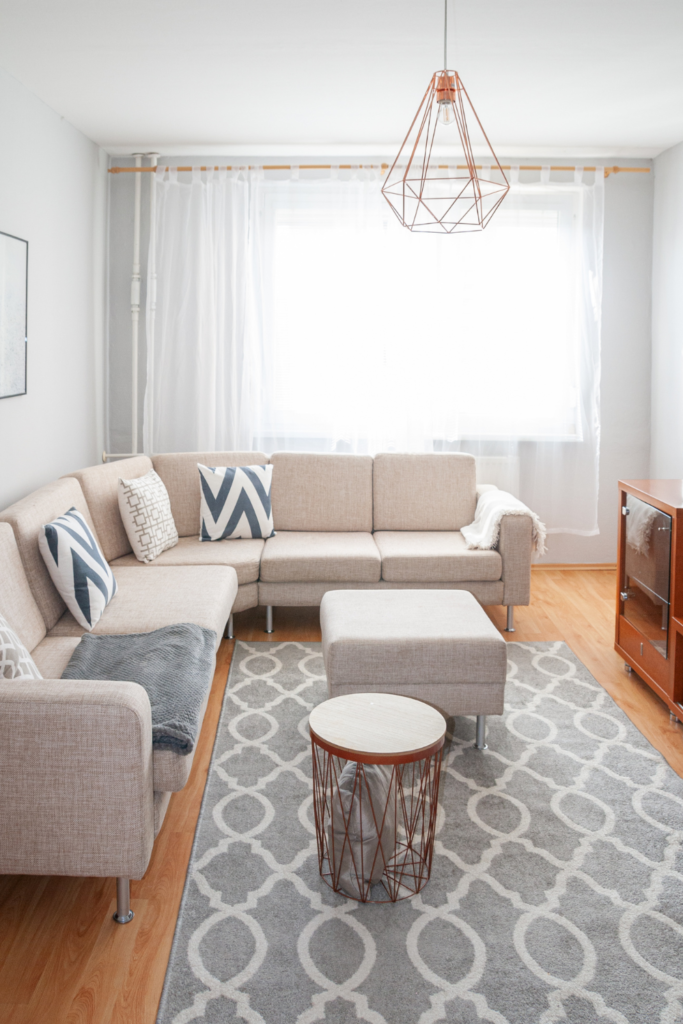
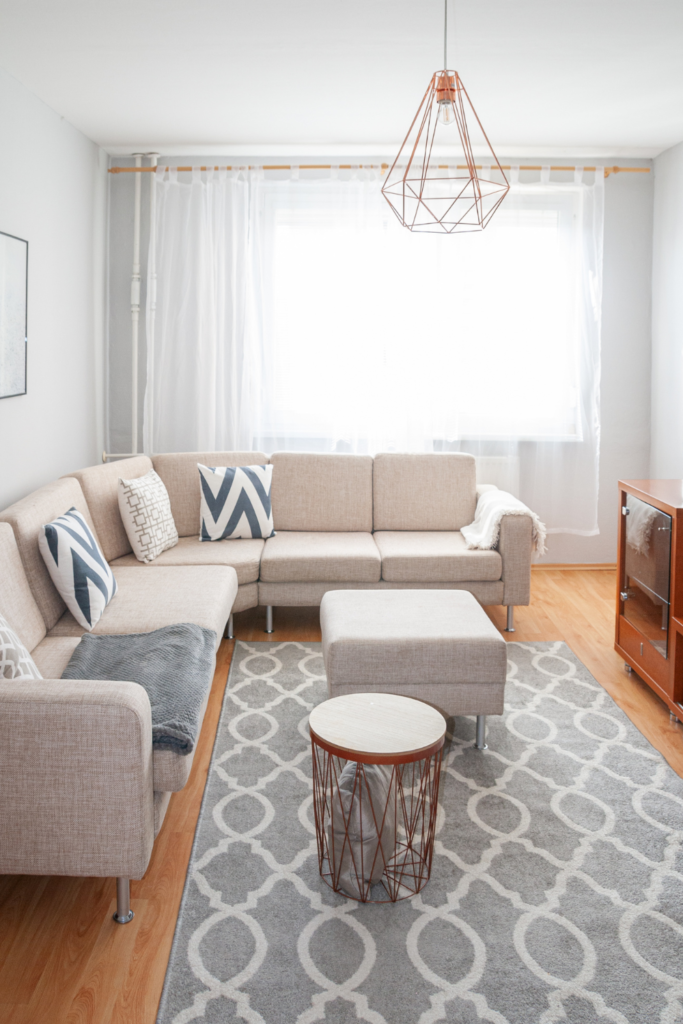
The L-shaped sectional is the most versatile configuration for open concept living rooms. It defines the living zone clearly, seats a family or group of guests comfortably, and works across a wide range of interior styles from contemporary to transitional. Look for a deep-seated version with a neutral tone such as warm grey, oatmeal, or soft slate; these shades hold up well across changing decor trends and keep the space feeling calm and cohesive.
Positioning matters with an L-shape. Place the chaise end pointing into the room rather than toward a wall so the sofa genuinely anchors the open plan rather than retreating to the edge of it. Removable covers are worth prioritizing if you have kids or pets, and a tighter woven fabric will resist wear better than a loose weave over time.
2. The Deep Seat U-Shaped Sectional Sofa
For a larger open concept space, a U-shaped sectional is one of the most impactful choices you can make. Wrapping around three sides of a central coffee table, it creates a self-contained living zone that feels genuinely enclosed and cozy even in an expansive room. It also seats six to eight people comfortably, which makes it an excellent option for families or anyone who entertains regularly.
Look for a modular U-shaped option if you can, since fixed configurations can be difficult to move through doorways and almost impossible to reconfigure later. A modular version lets you adjust the layout as your needs change. Pair it with a large area rug to reinforce the sense of a defined zone within the open plan.
Shop U-Shaped Sectional Sofa Here
3. The Modular Sectional Sofa System
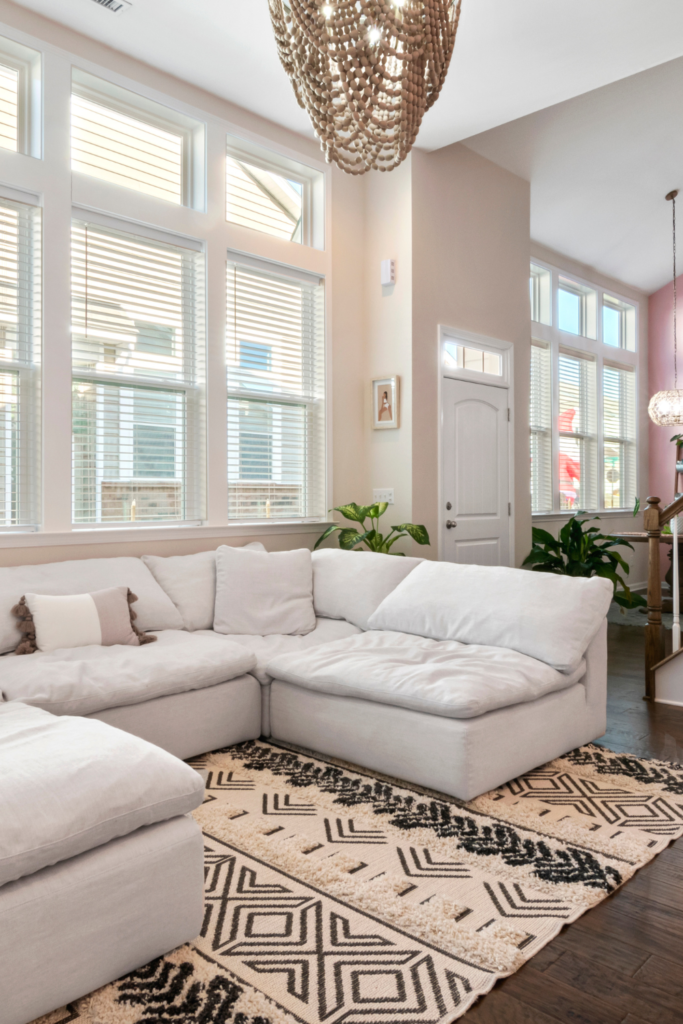
A modular sectional is the most flexible of all the sectional sofas for open concept living, and it’s the one I’d recommend if your space or needs are likely to change. Rather than a fixed shape, modular sofas are made up of individual pieces that can be arranged freely, expanded over time, or reconfigured whenever you want a refresh. You can start with a three-piece setup and add corner units, chaise sections, or ottomans as your budget allows.
Modular systems are also practical for apartments and rentals where getting a large sofa through the door can be an issue. Since the pieces come apart, delivery and installation are straightforward. Look for systems with a wide component range so you’re not limited in how you configure the layout.
Shop Modular Sectional Sofa Here
4. The Velvet Sectional Sofa with Chaise
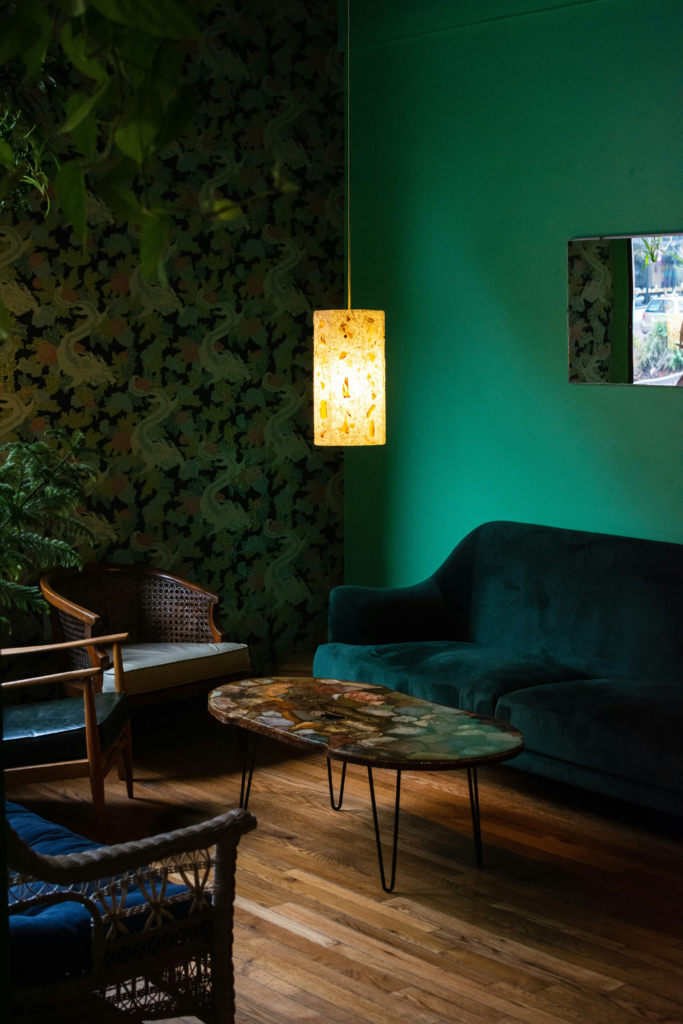
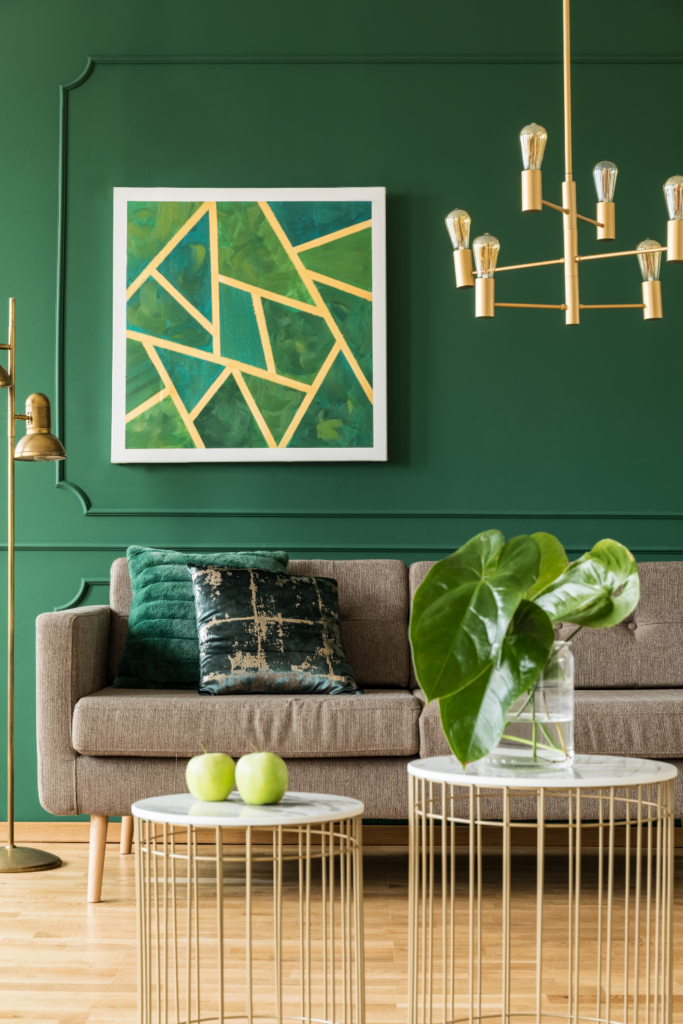
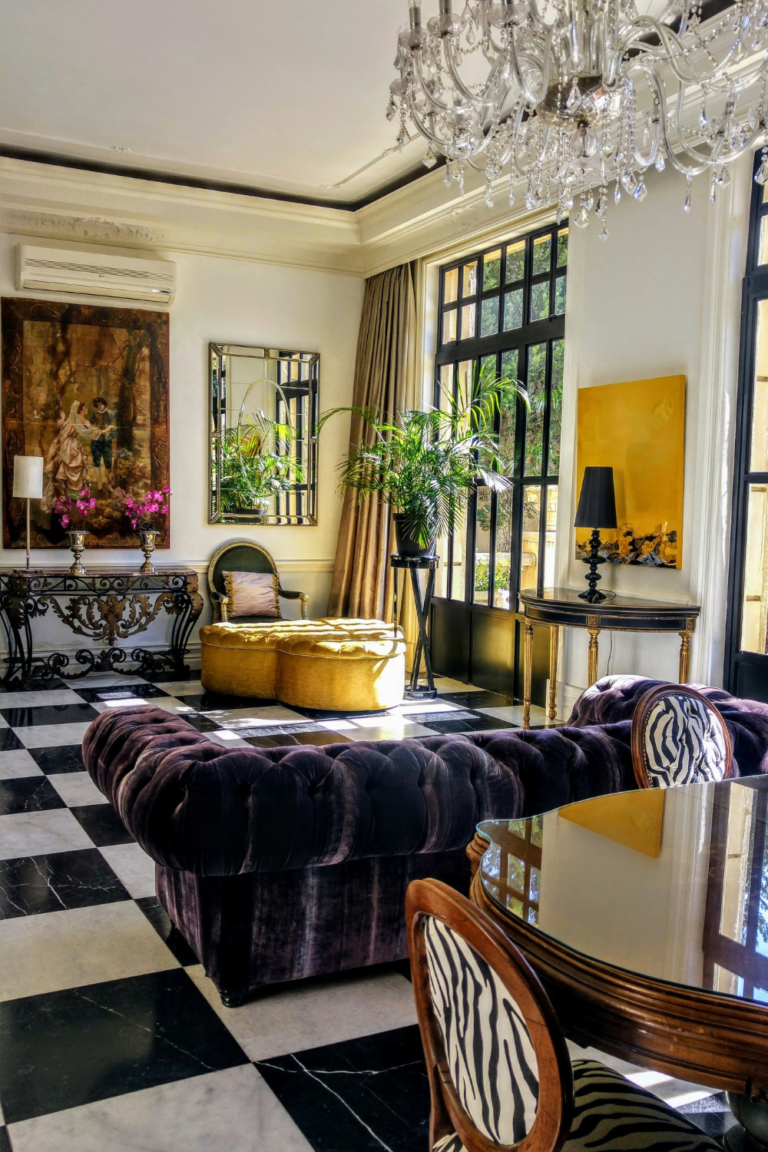
If you want your sectional to make a genuine style statement, a velvet sectional with a chaise extension does that beautifully. The texture adds warmth and visual depth that fabric and leather can’t match, and the chaise helps define the living boundary in an open plan room. Jewel tones work particularly well here: deep teal, forest green, burnt orange, and sapphire all create a bold focal point that gives the living zone real presence.
Modern velvet is far more durable and stain-resistant than it used to be, so it holds up better in everyday use than most people expect. Pair the sofa with a large area rug in a complementary tone to complete the zone, and keep surrounding furniture relatively simple so the velvet can hold its place as the room’s main statement.
Shop Velvet Sectional Sofa Here
5. Smart Living with a Compact Sofa
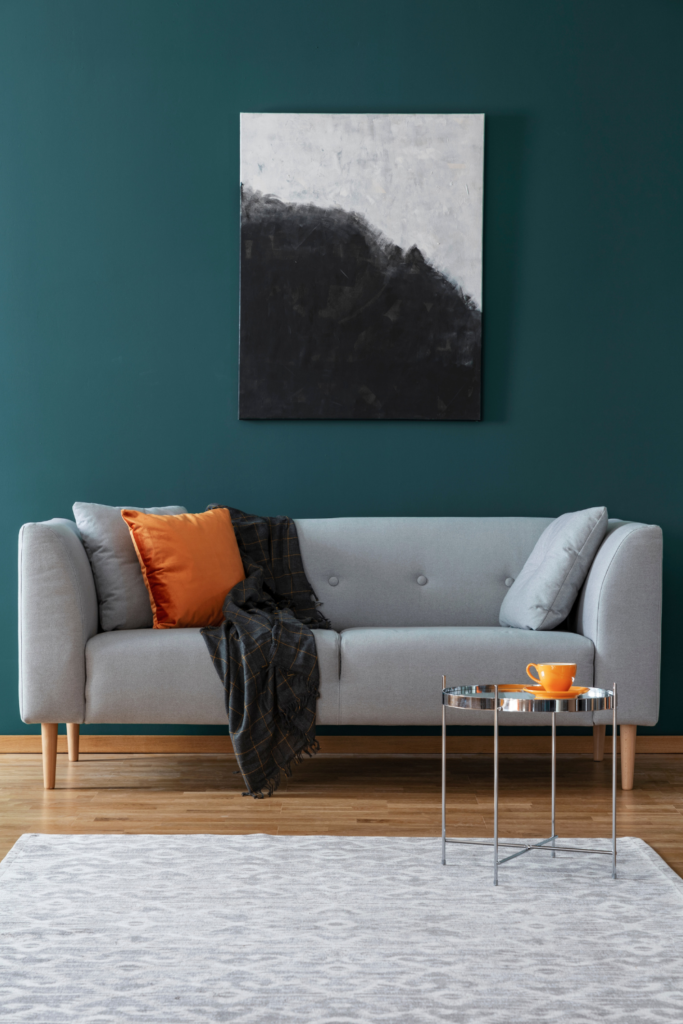
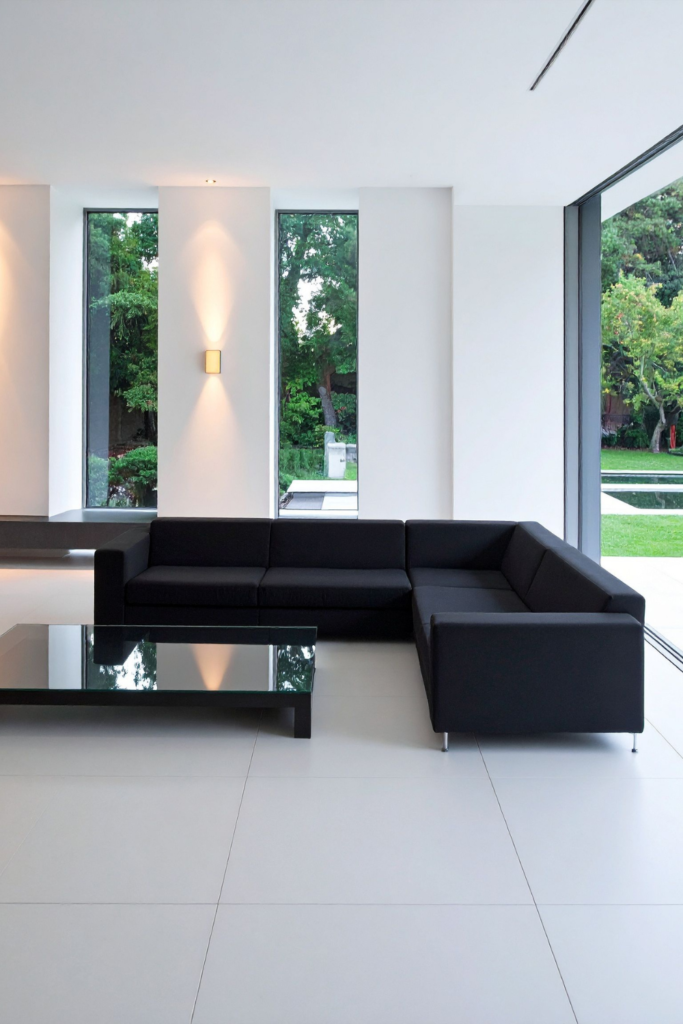
Not every open concept space is large, and in a smaller apartment or studio layout, an oversized sectional can easily overwhelm the room. A compact sofa with a streamlined silhouette gives you comfortable seating without dominating the floor plan, and it allows better traffic flow through a smaller open plan space.
The right compact sofa still needs to be sized proportionally to the room. Even at a smaller scale, it should be substantial enough to define a living zone rather than looking like it got lost in the space. Pair it with a rug to anchor it visually, and keep surrounding furniture low and lean to maintain an airy feel.
How to Position and Style Your Sectional
Choosing the right sofa is only part of the process. Where and how you place it changes everything about how the room reads and functions.
In most open concept layouts, floating the sectional away from the wall is the better choice. This feels counterintuitive if you’re used to lining furniture along the edges, but in an open plan space a floating sofa defines the living zone rather than hiding at its perimeter. Face it away from the kitchen and dining area, or position it back-to-back with the dining table to create a natural visual divide between spaces.
An area rug is essential. It visually anchors the seating zone even without walls to contain it. Choose one large enough that at least the front two legs of the sectional sit on it, keeping the seating area connected and grounded. Overhead lighting helps too: a pendant above the coffee table draws the eye downward and reinforces the sense of enclosure the sectional creates.
The Best Fabrics for Open Concept Homes
Open concept living rooms tend to be high-traffic, social spaces, so the fabric you choose for your sectional matters beyond appearance alone.
Performance fabrics are the most practical option for most households. Engineered weaves from brands like Crypton and Sunbrella offer the look of natural textiles with added resistance to stains, spills, fading, and everyday wear. They’re particularly well suited to homes with children, pets, or frequent gatherings.
Velvet has improved significantly thanks to modern weaving techniques. Today’s velvet is far more durable and easier to clean than older versions, and the soft texture adds real warmth in large open plan rooms. Leather and faux leather offer a clean, structured look that suits contemporary and industrial interiors. Both are easy to maintain and create a strong visual anchor, though leather can feel cool in winter and warm in summer depending on your climate.
Linen and cotton blends have a relaxed, natural quality that suits casual spaces well, though they generally require more upkeep than performance fabrics. Whatever material you’re considering, always request samples and view them in your space at different times of day. Lighting changes how color and texture read significantly, and a fabric that looks right in a showroom may feel different once it’s in your home.
Finding the Right Sectional for Your Open Concept Space
The right sectional sofa for open concept living comes down to three things: size that defines the zone, configuration that suits your floor plan, and fabric that supports your lifestyle. When those elements come together, the sofa stops being just a seat and becomes the piece that makes the whole space feel intentional.
If this post helped you narrow down your options, save it to Pinterest so you can come back to it when you’re ready to shop. And if you’re still working on the rest of the room, take a look at our Living Room Decor Ideas or our Spring Living Room Refresh for more styling inspiration.